13 October 2025
The 2025 Prize in Economic Sciences in Memory of Alfred Nobel is awarded, with one half to Joel Mokyr, “for having identified the prerequisites for sustained growth through technological progress”, and the other half to Philippe Aghion and Peter Howitt, “for the theory of sustained growth through creative destruction.” Young Academy of Sweden member Jessica Jewell answers 5 questions about the award.
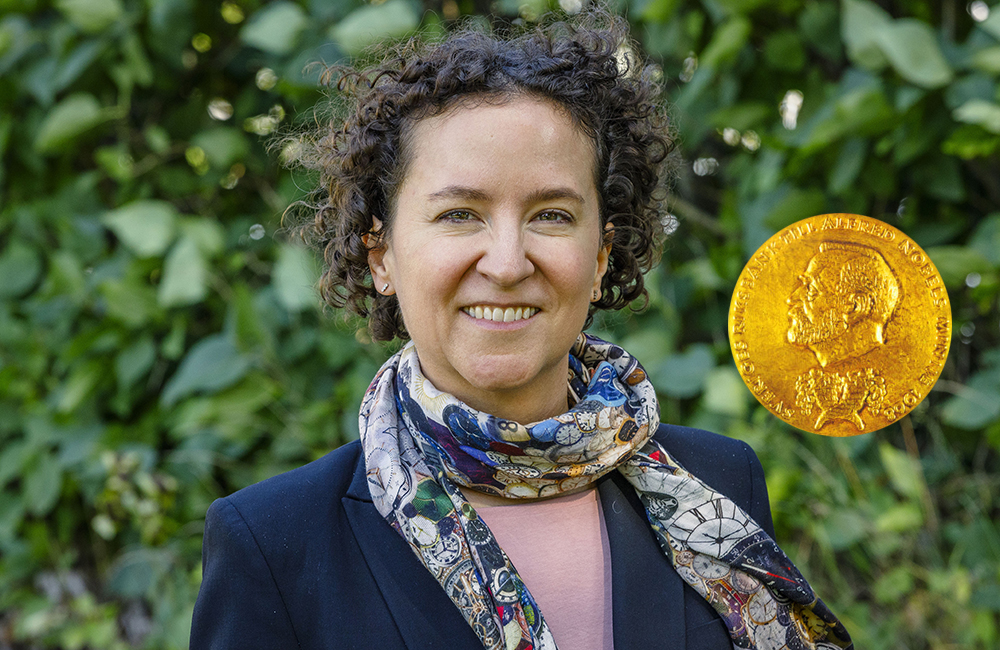
Jessica Jewell. Photo: Jesper Ahlin Marceta/Young Academy of Sweden
The Prize in Economic Sciences 2025: They show how new technology can drive sustained growth
Jessica Jewell is Professor of Technology and Society at Chalmers University of Technology and a member of the Young Academy of Sweden 2022–2027.
I study the pace and dynamics of policy-driven technology change. I am interested in how fast new technologies grow and what the role of policies is in supporting technological change. One part of my work that is very relevant to this year’s Nobel Prize in Economics is how policy makers should balance support between new innovations through R&D policies on the one hand and managing backlash against mature growing technologies. That question is really relevant to the work from this year’s winners who have shown that technology innovation has been one of the main drivers of economic growth but that technological innovation inevitably leads to what’s known as “creative destruction” where today’s companies and vested interests are hurt. In my work, I try to figure out how policymakers can and do balance between fostering innovation and supporting those who are hurt by it.
We’re living in a world of rapid technological change. The AI revolution and decarbonisation are going to fundamentally change the contours of society. This year’s Prize in Economic Sciences shows that at the macro-level, innovation and technological change drives economic growth. However, the work from the Laureates also shows that not all boats are lifted equally. This has important implications for today’s decision-makers. It is society’s commitment to science and innovation over the 20th century that drove the tremendous economic gains and we need to double down on this commitment to ensure continued economic prosperity. At the same time, decision-makers need to be cognisant that these gains are not distributed evenly in society and we need smart policies to quell the negative consequences for those groups who are negatively affected.
I think its brilliant. The Prize in Economic Sciences is always both about the science and the moment. We are living in a moment where some societies are turning their backs on science and innovation. The rapid technological change over the last 50 years has left manufacturing communities behind which has understandably led them to turn to new avenues for support. Yet the work from the winners of the Economics prize shows that the answer is not to turn our backs on science but to rather invest in science along with policies to support the so-called “incumbents” who get hurt by the transitions we are living through.
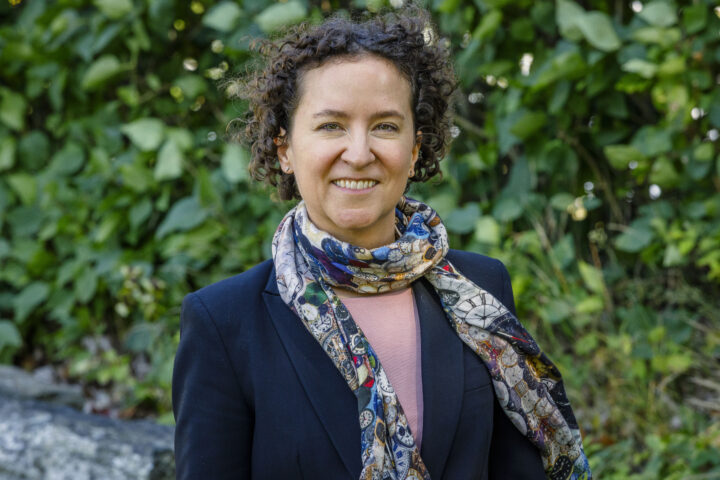
The Nobel prize in Economics is always both about the science and the moment. We are living in a moment where some societies are turning their backs on science and innovation. The rapid technological change over the last 50 years has left manufacturing communities behind which has understandably led them to turn to new avenues for support. Yet the work from the winners of the Prize in Economic Sciences shows that the answer is not to turn our backs on science but to rather invest in science along with policies to support the so-called “incumbents” who get hurt by the transitions we are living through.
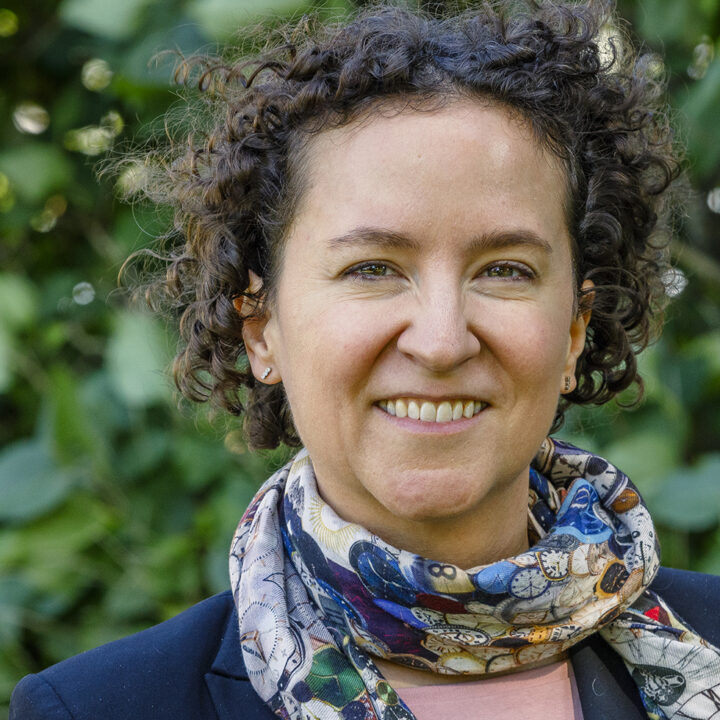
Jessica Jewell, Professor of Technology and Society at Chalmers University of Technology
Photo: Jesper Ahlin Marceta/Young Academy of Sweden
2009 Elinor Ostrom was the first political scientist and the first woman to win the Prize in Economic Sciences for her work on how natural resources are governed. The Prize citation was “for her analysis of economic governance, especially the commons”. Everyone thought that societies overuse and outstrip natural resources like clean water and fisheries. She showed that quite to the contrary, communities work together and develop shared rules to govern them. I think her work is particularly hopeful in light of today’s winners. Societies do find ways to work together to tackle difficult problems.
I think we are living in two moments – one of rapid technological change and a second of declining democracy. The awarded work from last year’s prize showed that good institutions lead to good economic outcomes. This year’s prize shows that technological progress leads to good economic outcomes. Together they show that the best way to a brighter future is to double-down on our commitment to both science and democracy. That’s how we got rich in the 20th century and lifted so many people out of poverty. Let’s do it again in the 21st.

Elinor Ostrom showed that communities work together and develop shared rules to govern them. I think her work is particularly hopeful in light of today’s winners. Societies do find ways to work together to tackle difficult problems.
Elinor Ostrom as a child. Illustration: Asin Delawi for Young Academy of Sweden’s children’s book ”Research Dreams – Stories for Curious Children”
Latest news from the Young Academy of Sweden, published approximately six times a year. You can unsubscribe at any time.


Five questions for Wojciech Michno and Marcel Tarbier on this year’s Nobel Prize in Physiology or Medicine