Across Sweden, young researchers making fantastic contributions to spreading knowledge and inspiring more people to ask curious questions. The Young Academy of Sweden will award the Research Beacon to a younger researcher based in Sweden who has made significant efforts to shine a light on knowledge, especially for children and young adults.


Nominations are submitted via a form on the Young Academy of Sweden’s website. Anyone can nominate someone, and you can also nominate yourself.
Nominations can be written in Swedish or English.
The jury of the Research Beacon and assessment criteria.
The prize is aimed at younger researchers in all disciplines. The candidate must be a doctoral student, or have obtained their doctoral degree no more than seven years before the nomination deadline, and must be active in Sweden.
The awardee receives a diploma, a prize object and a personal award of SEK 10,000.
Read more about the prize.
Olle Risberg, a member of the Young Academy of Sweden, gives a talk about his research under the direction of Linus Tunström. Photo: Lars Pehrson/Young Academy of Sweden
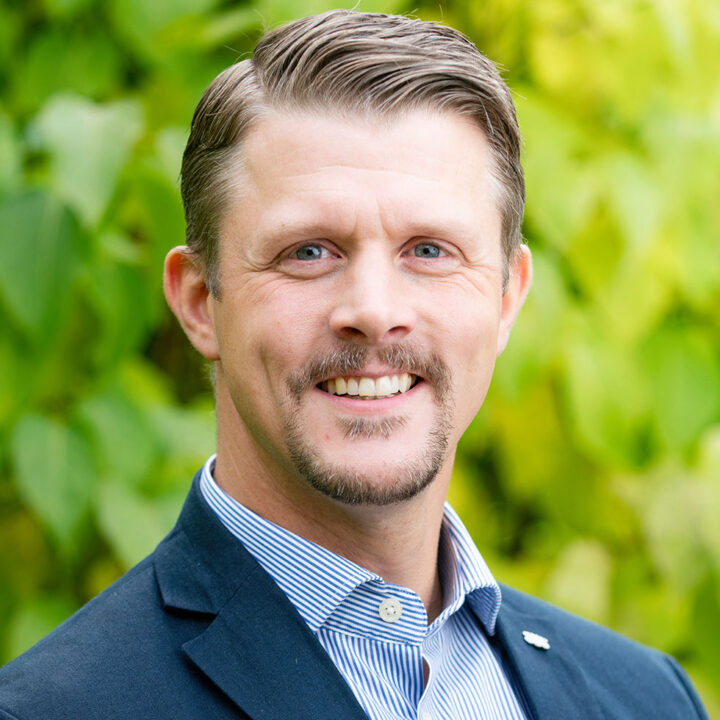
Resistance to knowledge thrives where researchers are invisible. Communicating research is therefore not just an educational act—it’s a democratic one.
Andreas Nord, chair of the jury for the Research Beacon, Associate professor in biology, particularly ecological physiology, at Lund University, member of the Young Academy of Sweden
Photo: Erik Thor/Young Academy of Sweden
The prize is aimed at researchers in all fields of study. Eligible are those who:
Please note that researchers who meet any of the following criteria are not eligible to apply:
Employed by a current member of the Young Academy of Sweden, or by a person who is part of the jury.
"*" indicates required fields

I look forward to the jury work with researchers of the Young Academy of Sweden and research journalism colleagues, and as always, to be inspired by science. When you look at the world through those glasses, it’s easy to be amazed.
Victoria Dyring, jury member, science journalist and presenter, SVT Swedish public service television
Photo: Jan Danielsson/SVT
Note: nominations that do not meet the basic criterion are not processed further.
The submission has potential to engage an audience. Examples:
It is particularly good if the submission engages:
For prize inquiries: contact Annika Moberg, 070-325 32 18
For the application system: contact Anna Kjellström, 070-673 94 45
The jury consists of three members from the Young Academy of Sweden and three external experts.

Member, Associate Professor of Biology, particularly Ecological Physiology, Lund University
I am interested in how animals adapt to a constantly changing environment, for example, in relation to a warmer, more unstable climate and as the ways we utilise the land change in a broad sense. My research group particularly works with various birds, from small birds in southern Sweden to large birds near the North Pole. I am also a dedicated entomologist with expertise in beetles and bugs, and I survey, lecture, and teach about insects on behalf of provincial administrations and various interest organisations.

Victoria is a Swedish TV-program host and producer, primarily known for her work in science journalism. She began her career as the host of ”Hjärnkontoret”, a science programme for young people, and has since hosted several science-oriented programmes on Swedish Public Service Television. For many years, she has been leading the weekly science program ”Vetenskapens värld”, the broadcasts when the Nobel Prizes are announced and the interviews with researchers and Laureates in the natural sciences live from the famous banquet. In 2010, she was promoted to honorary doctor at Stockholm University for her popular science engagement within the television medium. Photo: Jan Danielsson SVT

Catherine Fulgencio is a social media editor at the magazine Forskning & Framsteg, where she is responsible for presenting science journalism to a young audience. She works with channels such as TikTok, YouTube, and Instagram. Catherine has a background in social media journalism, including for Sveriges Radios P3 Nyheter. In 2024, Catherine reported from the Academy’s summer camp Forskarmöten (Research Encounters).

Gustav is a senior curator at the Nobel Prize Museum in Stockholm. He holds a PhD in the history of ideas and is the author of several works on the Nobel Prize and its history. Gustav regularly participates in discussions and lectures on the importance of science and the Nobel Prize in society. He also leads the Nobel Prize Museum’s successful podcast series “Ideas that Change the World.”

Member, Associate senior lecturer and assistant professor of stem cell biology and neurochemistry at Uppsala University and a SciLifeLab Fellow
I am fascinated by the chemistry of the brain and how the basic metabolic processes of cells affect brain health. My research group investigates how seemingly small changes, such as those caused by infections or imbalances in metabolism between brain cells, can contribute to brain disease. We aim to understand how these changes affect the function and communication of nerve cells, and how we can eventually intervene in these processes in a cell type-specific manner.

Member, Associate professor in digital cultures and publishing studies at Lund University
I am interested in what is happening to (fiction) literature and literary culture in a digital age. My research is interdisciplinary, and I combine perspectives from literary studies, media studies, cultural studies, and publishing studies to examine how new digital formats, streaming services, and AI affect literature itself. I read and listen (!) a lot to fiction in all genres. Most often, I listen while running or when I commute over the bridge to Sweden.
Latest news from the Young Academy of Sweden, published approximately six times a year. You can unsubscribe at any time.

