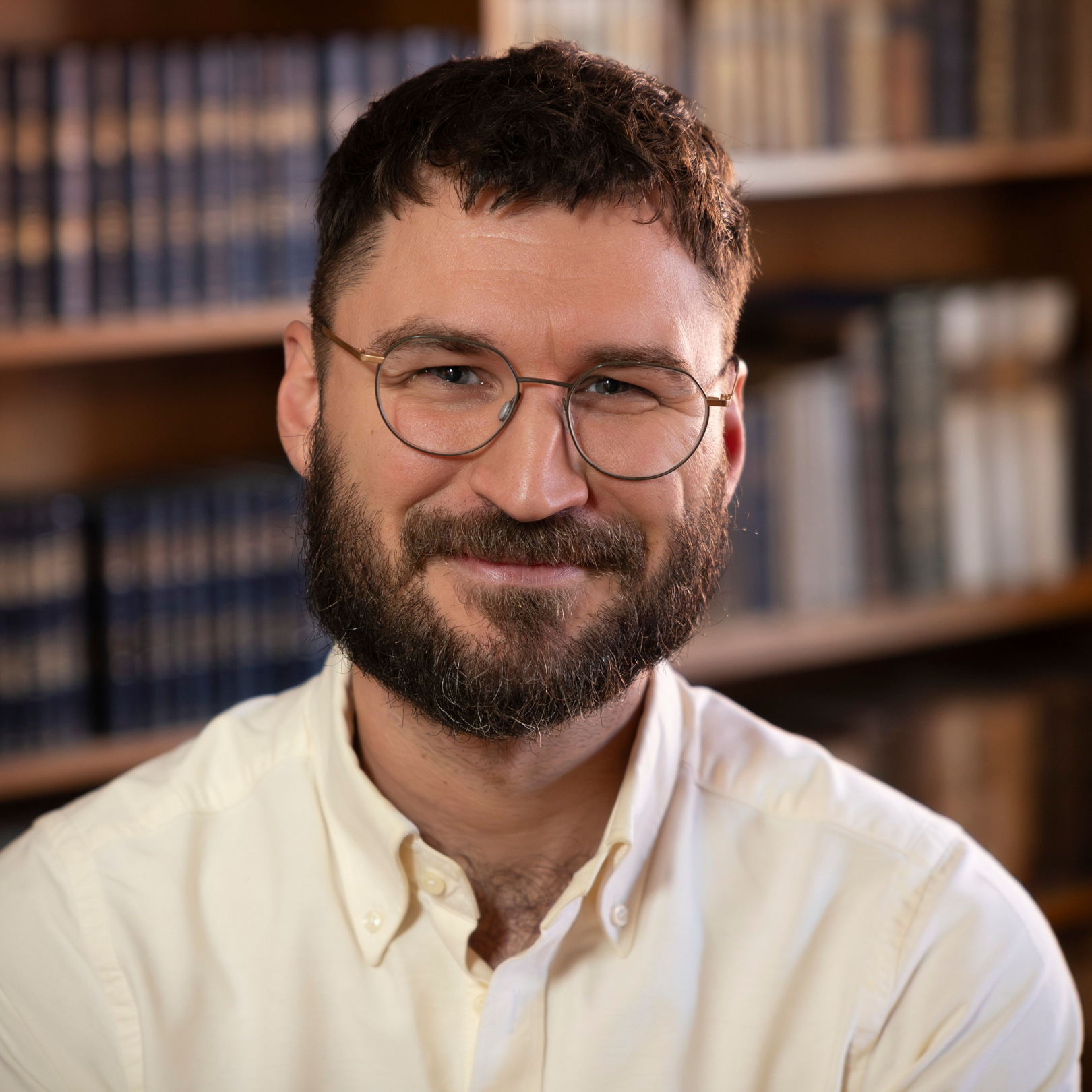
Photo: Mikael Wallerstedt
My research deals with political, ethical, and existential questions surrounding AI and other digital technologies, with a particular focus on time, memory, and the authority of the past. To approach these questions, I combine technical analysis with mythological, philosophical, anthropological, and literary elements.
My first book, The Afterlife of Data, explores what happens to our personal data when we die, and how this connects to contemporary global power struggles—who owns our digital past today? Who should have the right to decide over it? And how does this reshape our understanding of the role of the dead in society.
My second book, Gods of Data: An Atheist Critique of AI, argues that the technical processes through which today’s AI models are created mirror the social processes through which gods emerge. This, in turn, opens up the possibility of drawing on the tradition of religious critique—from Nietzsche to Hägglund—as a basis for an existential critique of technology.
Interests: AI, philosophy, religion and politics – topics I often talk about with anyone who wants to listen (and others). Despite this, I am 8/10 fun at parties.
Other: I am a poor swimmer.
For me the Young Academy of Sweden is a platform to discuss and communicate issues concerning the conditions of science. Everyone wants “world-class research” but the question of what actually characterises good scientific practice, and under what conditions it can be achieved, is often relegated to seminars far from political decision-makers.

Latest news from the Young Academy of Sweden, published approximately six times a year. You can unsubscribe at any time.