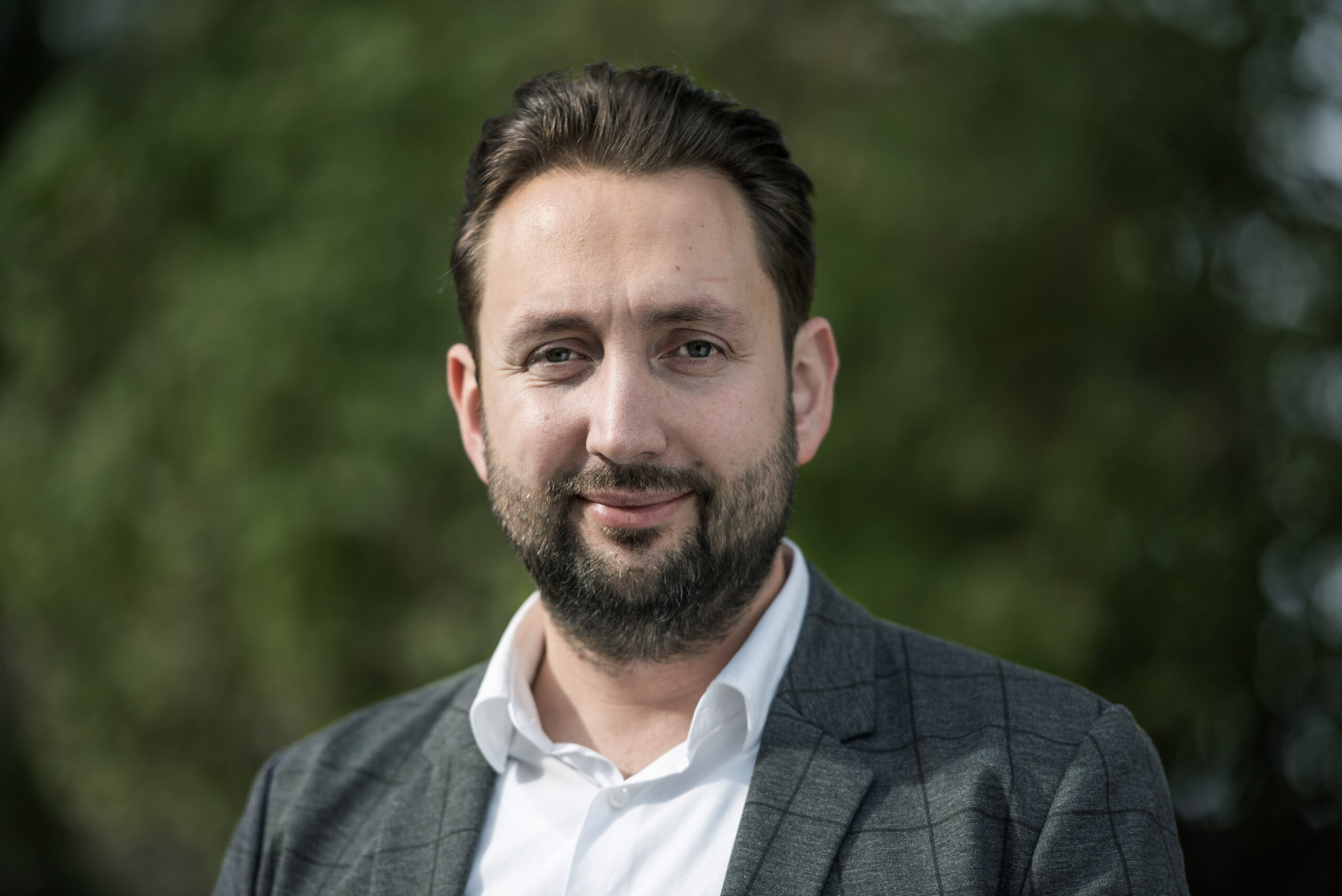
Photo: Lars Pehrson/Sveriges unga akademi
From a mathematical perspective, the goal of optimisation is to calculate the best possible solution to various problems given certain constraints. Optimisation problems can, for example, involve calculating the most effective cancer treatment or determining the optimal production plan that minimises emissions and raw material usage. By describing optimisation problems in a mathematical form, we can use systematic methods and algorithms to find the optimal solution. Some types of optimisation problems can today be solved very efficiently and are integrated into many of our technical aids. For example, GPS navigators effectively solve large optimisation problems to determine the best route between two cities. Other types of optimisation problems, however, are very difficult to solve with the methods we know today. Difficult optimisation problems can theoretically take thousands of years to solve even if we use all available computing power. Unfortunately, many important optimisation problems belong to the difficult type, which today reduces their practical usability and societal benefits.
In my research, I focus on developing mathematical theory, methods, and computational algorithms to solve certain types of optimisation problems that are currently very challenging to handle. This involves, for example, specific classes of optimisation problems with important applications in machine learning, artificial intelligence, production planning, and system design.
Born: 1989
Interests: I am generally interested in technology and enjoy fixing things. I also like sailing. During the pandemic, I became more interested in cooking and now really enjoy being in the kitchen.
Other: Ever since I was young, I have been interested in making things better. My first remote-controlled car was taken apart in the hope of making it faster. Therefore, it is likely quite natural that I became fascinated by optimisation as a research area. When I was younger, I was also very interested in motors and, for example, worked on building jet engines in my parents’ garage.
I want to actively work to strengthen the conditions for young researchers/academics in Sweden and work towards having an internationally competitive research and working environment. According to me, internationally competitive working conditions are a fundamental prerequisite for us to be able to conduct research and teaching at the highest level. I also want to work to convey the importance of research and education in society.
Latest news from the Young Academy of Sweden, published approximately six times a year. You can unsubscribe at any time.