Research and security policy brought the Academy together at KTH and the Swedish Defence University
On 26–27 November, the Young Academy of Sweden gathered in Stockholm for a two-day meeting hosted at the Swedish Defence University and KTH Royal Institute of Technology. The overarching theme was the relationship between research and security in an increasingly uncertain world.
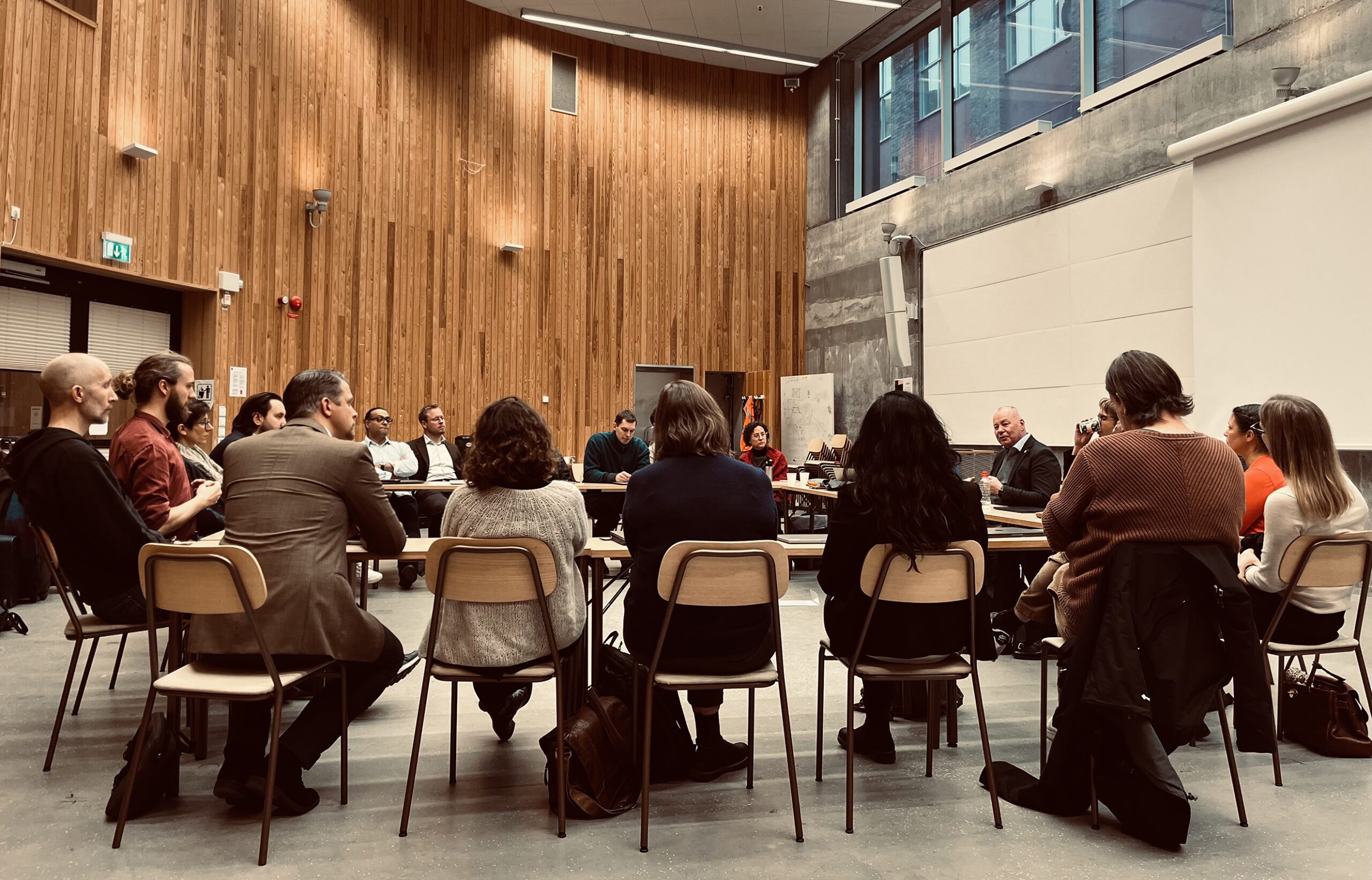
The Young Academy of Sweden in conversation with Anders Söderholm, President of KTH, on responsible internationalisation.
Robert Egnell, President of the Swedish Defence University, spoke about the role of research in Sweden’s total defence and highlighted how international scientific collaboration comes under strain as global tensions rise. Given the university’s mission, questions of ethics are an integral part of daily life at the Swedish Defence University.
Robert Egnell, President of the Swedish Defence University.
The Swedish Defence University has expanded significantly in recent years in response to a changing global security landscape. Robert was asked how the institution attracts excellent, internationally connected researchers. The importance of creating opportunities to build strong academic environments was highlighted. One of the university’s recent appointments is Aryo Makko, Professor of History and former member of the Young Academy of Sweden, who welcomed the Academy on arrival and facilitated the visit.
Robert Egnell, President of the Swedish Defence University, receives a gift from the Academy, presented by Elham B. Rostami, Deputy Chair, neurosurgeon and Associate Professor of Neurosurgery at Uppsala University and Karolinska Institutet.
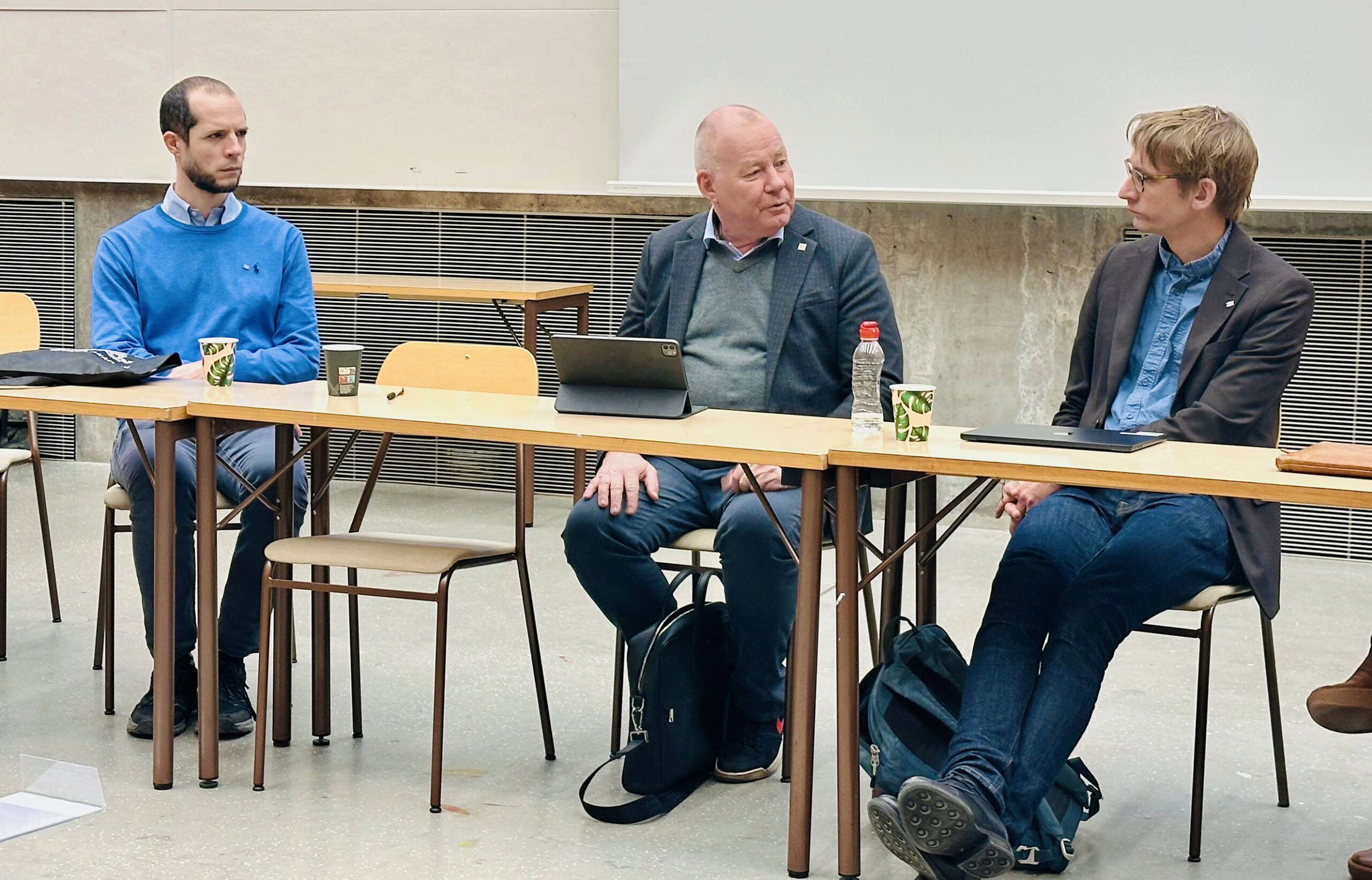
Robert Egnell, President of the Swedish Defence University, speaks about the university’s development and what responsible internationalisation means in the context of the Swedish Defence University.
Gabriele Messori, Chair of the Young Academy of Sweden and Professor of meteorology at Uppsala University, opened the Academy meeting at the Swedish Defence University.
Internal matters were also dealt with at the Swedish Defence University, with Elham Rostami preparing to hand over the floor using the “catchbox”.
Open floor.
Sigrid Schottenius Cullhed, Associate professor and senior lecturer in literary studies in literary studies at Uppsala University, the Department of Literature and Rhetoric.
Måns Magnusson, associate professor of statistics at Uppsala University, David Marlevi, associate professor of medical imaging at Karolinska Institutet, and Olle Risberg, associate professor of philosophy at Uppsala University and the Institute for Futures Studies, in conversation during an energy break at the Swedish Defence University. On the right, Jesper Ahlin Marceta, the Academy secretariat’s coordinator for research policy, keeping an eye on the time.
Ragnhild Lunnan, associate professor of astronomy at Stockholm University; Johan Larsbrink, associate professor of molecular enzymology at Chalmers University of Technology; Marcel Tarbier, assistant professor in data-driven life science for precision medicine and diagnostics at the Department of Immunology, Genetics and Pathology and Science for Life Laboratory, Uppsala University; and Peter Søgaard Jørgensen, theme leader in environmental and sustainability science at the Royal Swedish Academy of Sciences and Stockholm University.
Andreas Nord, associate professor of biology, specialising in ecophysiology at Lund University, celebrated his birthday and was honoured with a hat and a traditional cheer. On the right is Jennifer Mack, senior lecturer and associate professor of architecture at KTH Royal Institute of Technology. Andreas and Jennifer serve as convenors of the academy’s research policy working group this year.
Scientific presentations in the Officers’ Mess
Later that afternoon, the Officers’ Mess at the Swedish Defence University filled with the voices of researchers from the Young Academy of Sweden, as the day concluded with the highly appreciated scientific presentations by Laura Bacete Cano, assistant professor of plant cell and molecular biology at Umeå University; Marcel Tarbier, assistant professor in data-driven life science for precision medicine and diagnostics at the Department of Immunology, Genetics and Pathology and Science for Life Laboratory, Uppsala University; and Olle Risberg, associate professor of philosophy at Uppsala University and the Institute for Futures Studies.
Laura Bacete Cano, assistant professor of plant cell and molecular biology at Umeå University, presenting her field of research on plant communication.
Laura Bacete Canos scientific presentation on plant communication.
Marcel Tarbier, assistant professor in data-driven life science for precision medicine and diagnostics at the Department of Immunology, Genetics and Pathology and Science for Life Laboratory, Uppsala University, presenting his research on cellular systems. Marcel illustrated the mapping of different cell types as a shift “from smoothie to fruit salad”, as the picture becomes increasingly detailed and specific.
Olle Risberg, associate professor of philosophy at Uppsala University and the Institute for Futures Studies, discussing his research on the foundations of human values, illustrated here with examples from the allocation of research funding.
Ruth Pöttgen, particle physicist; Björn Lundberg, historian; Gabriele Messori, chair of the academy and professor of meteorology; Peter Søgaard Jørgensen, researcher in sustainability science; Laura Bacete Cano, researcher in molecular biology; Cecilia Engdahl, researcher in experimental autoimmunity; and Olle Risberg, researcher in philosophy, listening to the scientific presentations in the Officers’ Mess at the Swedish Defence University. In the background is Helena Bornholm, responsible for outreach activities.
Måns Magnusson, associate professor of statistics; Sverker Lundin, CEO; and David Marlevi, associate professor of medical imaging, awaiting the start of the scientific presentations.
Marcel Tarbier, assistant professor in data-driven life science for precision medicine and diagnostics at the Department of Immunology, Genetics and Pathology and Science for Life Laboratory, Uppsala University, presenting his research on cellular systems.
Visit to Digital Futures
The second day began with a study visit to Digital Futures at KTH, a cross-disciplinary research centre with the vision of creating a sustainable society through digital transformation.
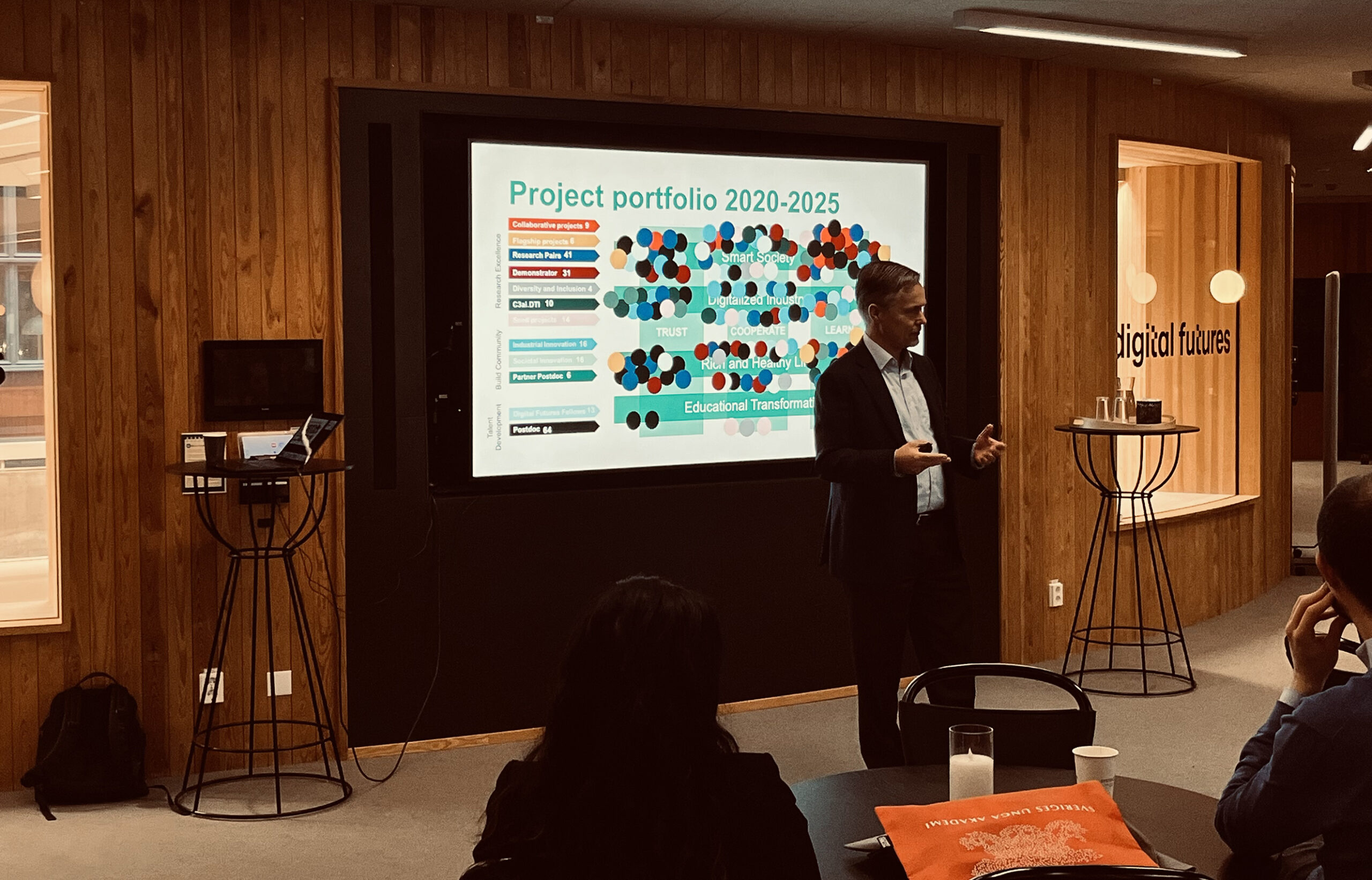
Karl Henrik Johansson, professor, KTH and director, Digital Futures.
Professor and executive director Karl Henrik Johansson and executive director Annika Szabo Portela introduced the centre, which was established in 2020 by KTH, Stockholm University and RISE. The initiative is funded within the framework of the Swedish government’s strategic research areas. Digital Futures is tasked with addressing societal challenges through digital transformation and today serves as a national hub for research and collaboration in the field.
Digital Futures brings together more than 200 research groups in efforts to shape a sustainable future through digital solutions that deliver the greatest possible benefit to society.
Key research areas within Digital Futures include cybersecurity and trust, connected and digitally controlled physical systems, machine learning and artificial intelligence.
Between Europe, China and the United States: new conditions for collaboration
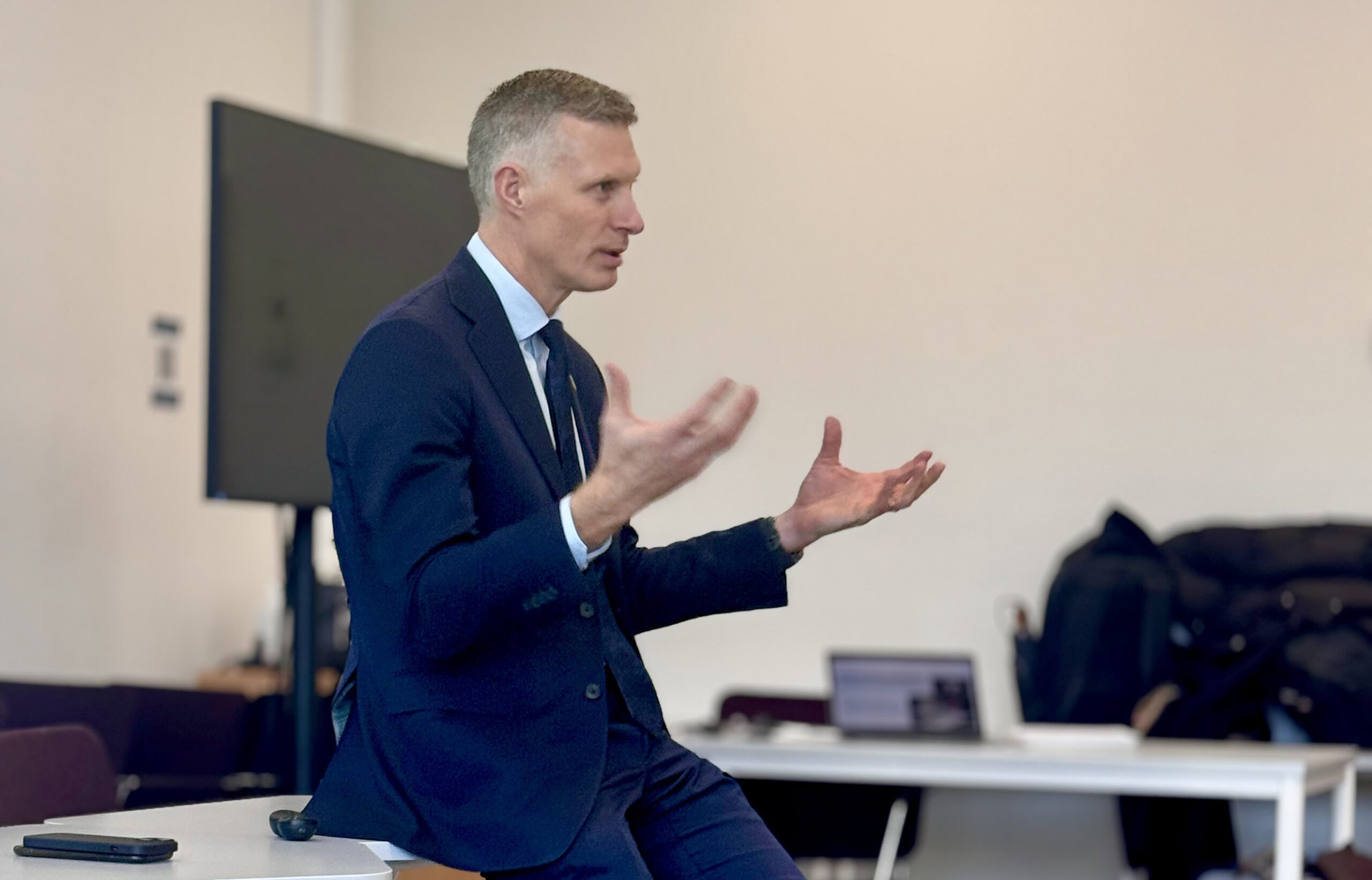
The academy meeting welcomed Anders Söderholm, president of KTH, who reflected on universities’ international relations and the increasingly central question of responsible internationalisation.
Gabriele Messori, chair, Anders Söderholm, president of KTH, and Björn Lundberg, member.
Europe, China and the United States have emerged as the major blocs, and they are, in part, moving further apart. This is something Sweden must now navigate. There may, however, be opportunities for Sweden to compete more effectively internationally. The university now has a more informed understanding of which partnerships genuinely strengthen its activities, and which come with unclear intentions. Rapid technological developments, in areas such as AI and quantum technology, further intensify these existing challenges.
Anders Söderholm, president of KTH, joined the academy for a discussion on responsible internationalisation.
One of the academy’s working groups in session.
The academy in conversation with Anders Söderholm.
One of the academy’s working groups in session. From left: Sara Tanderup Linkis, associate professor of digital cultures and senior lecturer in publishing studies at Lund University; Anna Kjellström, officer at the academy secretariat; Cecilia Engdahl, associate professor of experimental autoimmunity at the Sahlgrenska Academy, University of Gothenburg; Sverker Lundin, CEO of the academy secretariat; Gabriele Messori, chair of the academy and professor of meteorology at Uppsala University; and Johan Larsbrink, associate professor of molecular enzymology at Chalmers University of Technology.
Looking outward and setting the course for the year ahead
The academy meeting continued with discussions in the working groups. Topics included the Young Academy Day, the Research Beacon prize, the academy’s input to the 2028 research bill, and the development of the summer youth programme Researcher Encounters.
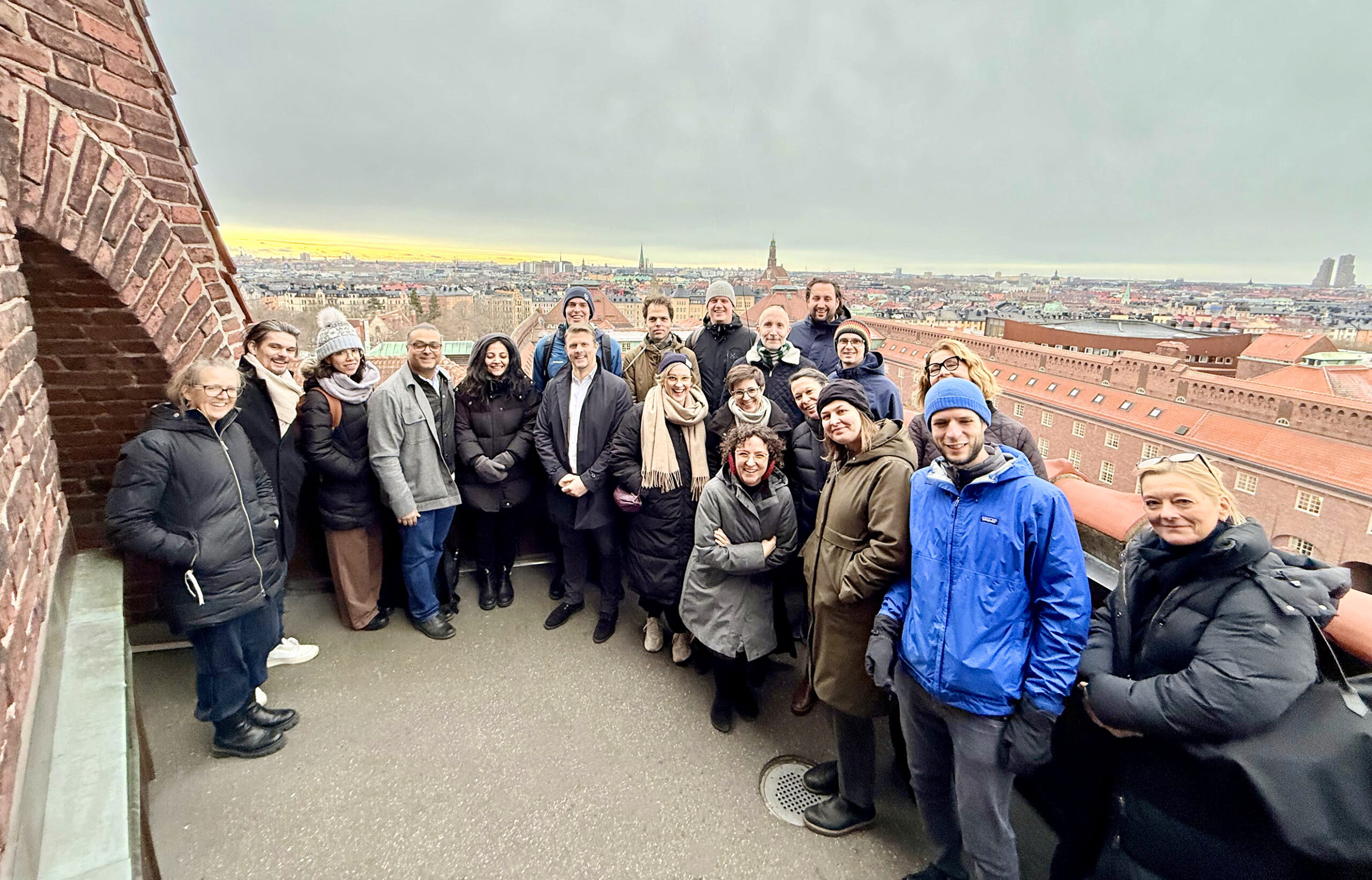
Group photo from the Clock Tower, KTH.
The academy also adopted next year’s operational plan. During the afternoon, the discussions on the conditions for research in an uncertain world were matched by a clear sense of momentum and an inspiring energy ahead of the activities planned for 2026. The next meeting will take place in March, when the academy travels to Brussels.
The Academy visits KTH. In the foreground Andreas Nord, associate professor in biology, particularly ecological physiology, at Lund University, and Adel Daoud, assistant professor in analytical sociology at Linköping University and affiliated associate professor in AI, data and information technology at Chalmers.
The Academy enjoys the view from the Clock Tower. Facing the camera: Ruth Pöttgen, associate professor of particle physics at Lund University, Johan Larsbrink, associate professor in molecular enzymology at Chalmers, Jan Kronqvist, assistant lecturer in mathematics at KTH, Marcel Tarbier, assistant university lecturer in data-driven bioscience for precision medicine and diagnostics at the Department of Immunology, Genetics and Pathology and Science for Life Laboratory, Uppsala University,
Royal Institute of Technology in Stockholm, in the background the towers of Johannes Church, Engelbrekt Church and the modern Northern Towers can be seen.
On 23–24 April, the Young Academy of Sweden travelled to Warsaw for a joint meeting with the Young Academy of Poland. At a time when the conditions of research can no longer be taken for granted,…
At the April academy meeting, a new leadership team was elected for the Young Academy of Sweden. Gabriele Messori, Professor of Meteorology at Uppsala University, will take on the role as Chair. T…
At the academy meeting in April, the new academy board for the Young Academy of Sweden was elected. The new chair is Sofia Lodén, associate professor of French at Stockholm University and a member…
Cookies ("cookies") consist of small text files. The text files contain data which is stored on your device. To be able to place some type of cookies we need your consent. We at Foundation for Swedens young academy, corporate identity number 802477-9483 use these types of cookies. To read more about which cookies we use and storage duration, click here to get to our cookiepolicy.
Manage your cookie-settings
Necessary cookies
Necessary cookies are cookies that need to be placed for fundamental functions on the website to work. Fundamental functions are for instance cookies that are needed for you to use menus and navigate the website.
Statistical cookies
To know how you interact with the website we place cookies to collect statistics. These cookies anonymize personal data.
Personalization cookies
In order to provide a better experiance we place cookies for your preferances
Close
Subscribe to our newsletter
Latest news from the Young Academy of Sweden, published approximately six times a year. You can unsubscribe at any time.