2 June 2026
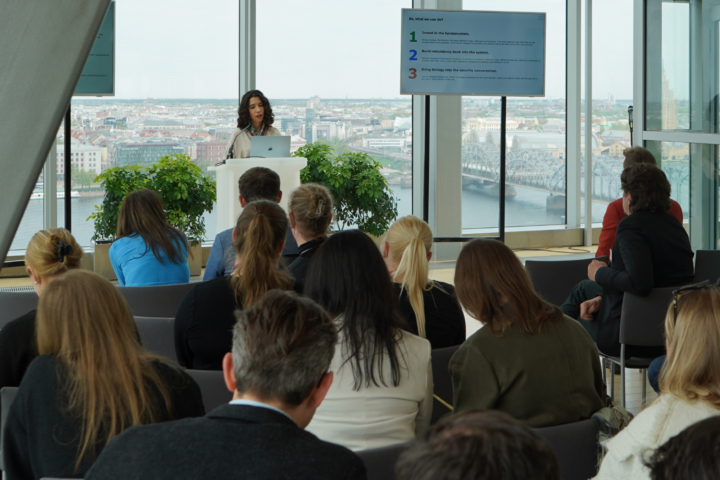
From May 26–29, members of the Young Academies and Senior Academies of Sciences and Arts of Europe gathered in Warsaw to tackle the most pressing institutional issues facing the scientific community today. The program focused on safeguarding academic freedom, reforming research assessment, and driving impactful science advocacy amid escalating global challenges.
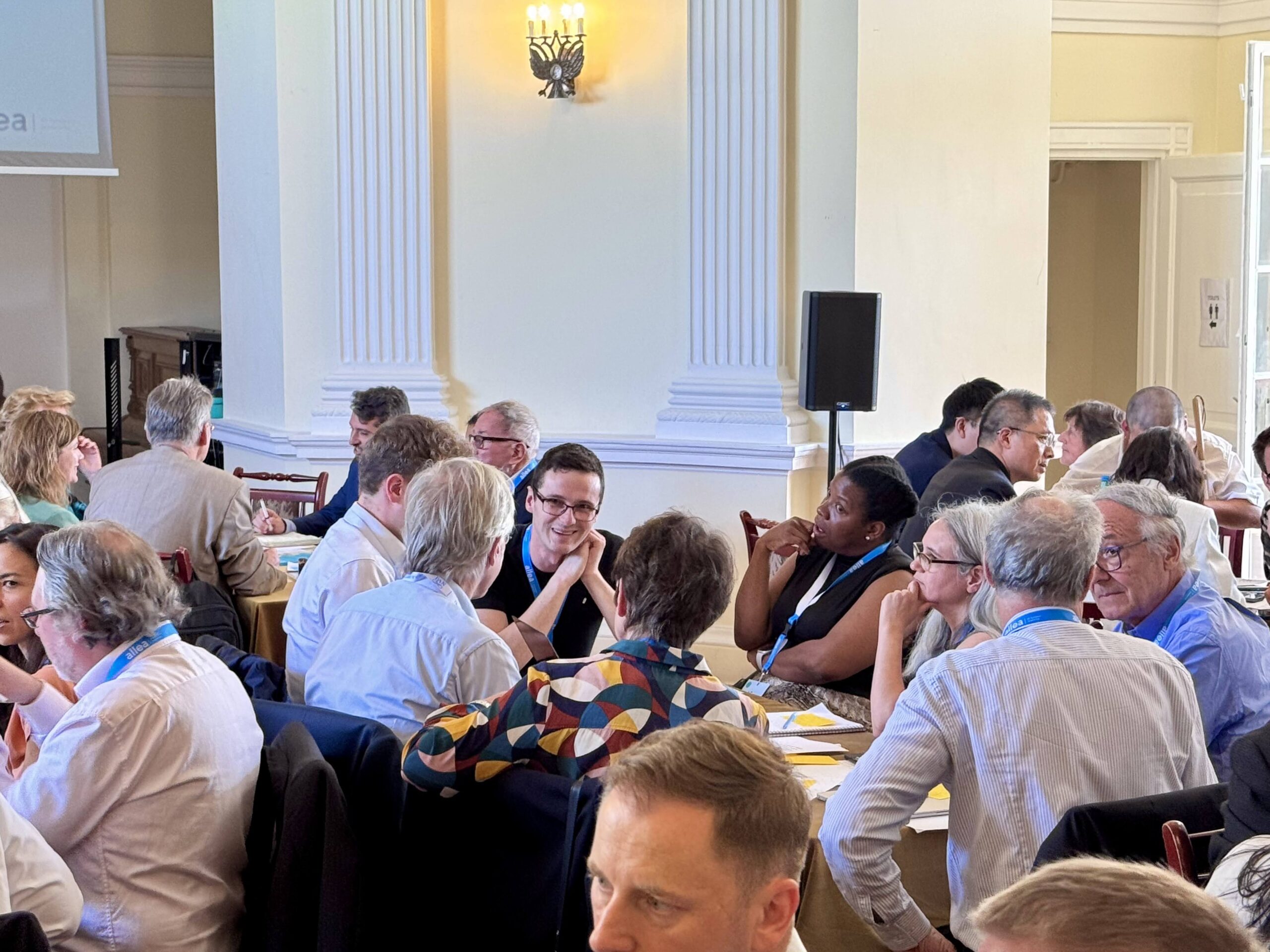
Photo: the The Young Academy of Sweden.
The Young academy of Sweden is a member of three networks that all met up in Warsaw at the end of May. ALLEA – the European federation of academies of sciences an humanities – had a public conference and its general assembly, the network of European National Young Academies (ENYA) had its yearly meeting, and the node for young academies to supply the Commission with science advice, YASAS (Young Academy Science Advice Structure) had its yearly meeting and elected a new board.
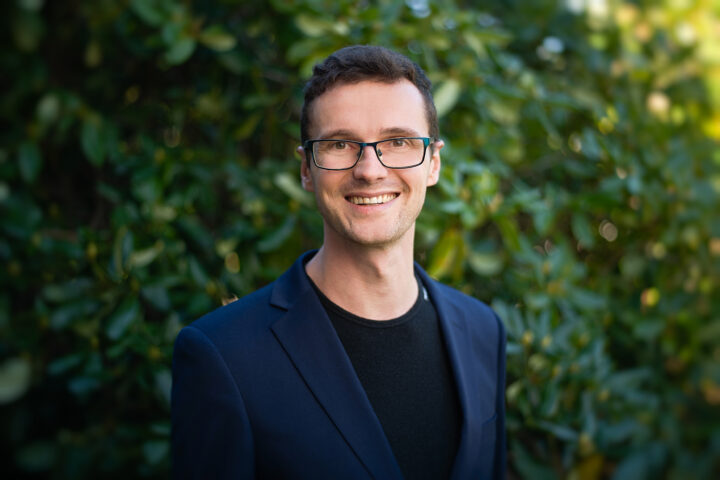
It was fantastic to meet all the academies. It became clear that we share the same challenges across countries, disciplines and career stages, and that we need to take shared responsibility to overcome them.
– Marcel Tarbier
Solidarity with Ukraine: Reaffirming the 10-Point Action Plan
The meeting opened with a critical side event hosted by the European Fund for Displaced Scientists (EFDS), titled “Supporting the Ukrainian research ecosystem through international exchange and collaboration.” Which resulted in a joint appeal, officially reaffirming the 10-point Action Plan originally adopted in 2022 by the academies of Ukraine, Poland, the U.S., the UK, Germany, Denmark, and ALLEA (the European Federation of Academies of Sciences and Humanities).
Reforming Research Assessment with CoARA
Shifting focus to systemic academic reform, a side event hosted by the Coalition for Advancing Research Assessment (CoARA) targeted the challenges of the current status quo. Participants exchanged concerns and best practices.
ALLEA Public Conference: Trust, Integrity, and Resilience
At the ALLEA Public Conference, “Towards a Future of European Research Area: Boosting Trust, Integrity and Resilience,” leaders urged the community to stand firm in its values. Robbert Dijkgraaf, President-Elect of the International Science Council, delivered a resonant reminder on the necessity of open borders in science: Open science and collaboration are vital especially in times of global tensions—we must actively avoid paranoia and naivety alike.
The conference concluded on a high note with the presentation of the Madame de Staël Prize to Maria Leptin, President of the European Research Council (ERC), honoring her as a true champion of academic freedom. Nobel laureate Christiane Nüsslein-Volhard delivered the laudatory speech.
Defining the Boundaries of Academic Freedom
Academic freedom was also at the centre during the dedicated meeting of the European Young Academies. Delegates emphasised that academic freedom is a foundational requirement for robust science, rather than an elite privilege.
It was clarified that academic freedom should not be equated with absolute freedom of speech, as it remains strictly constrained by scientific methodologies and rigorous ethical standards. To address growing political and economic threats, three parallel workshops analysed these pressures through distinct lenses:
Looking Ahead: Empowering Early- and Mid-Career researchers in Policy
The week wrapped up with a meeting of YASAS (Young Academies Science Advice Structure). Discussions focused on the future of science communication and advisory roles, specifically on how the next generation of early-career researchers can be better recognised, encouraged, and rewarded for their contributions to European science-for-policy frameworks.
Many thanks to the Polish Young Academy and the Polish Academy of Sciences for hosting these great events at the Staszic Palace and Copernicus Science Centre in Warsaw!
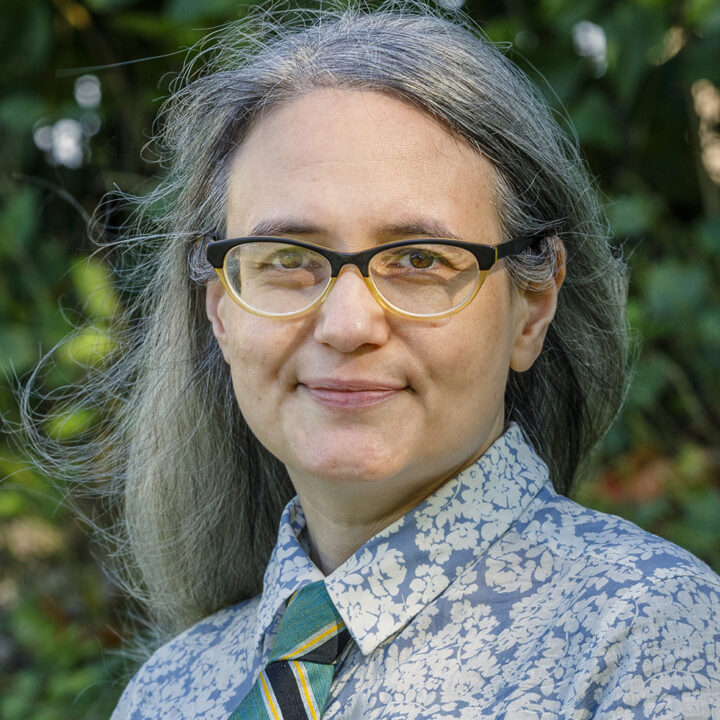
I found the joint ENYA, ALLEA and SAPEA meetings sincerely inspiring. I learned so much from many interesting people, and can’t wait to continue the work, in particular in my role working with the ALLEA task force on trust in science. I also learned about some cool projects other young academies have been successful with, that I think will be useful for us to think about in designing our own activities.
– Yaffa Epstein
Latest news from the Young Academy of Sweden, published approximately six times a year. You can unsubscribe at any time.


