4 December 2025
On 3–4 December 2025, we gathered young academies from Latin America, North America, Africa, and Europe in Stockholm for the symposium Academic Freedom in Times of Crisis. Over two intensive days, academic freedom was linked to the resilience of democracy.
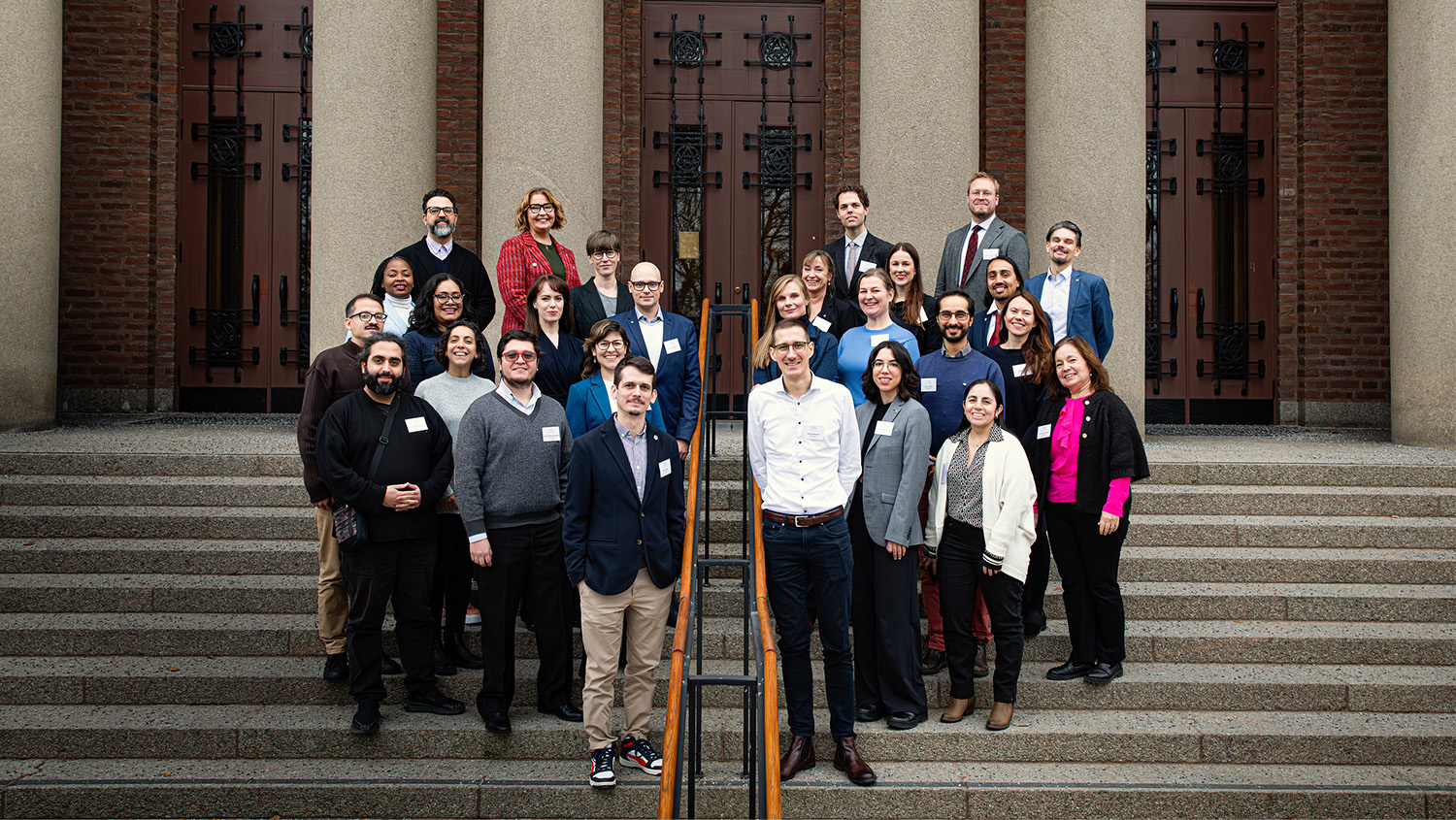
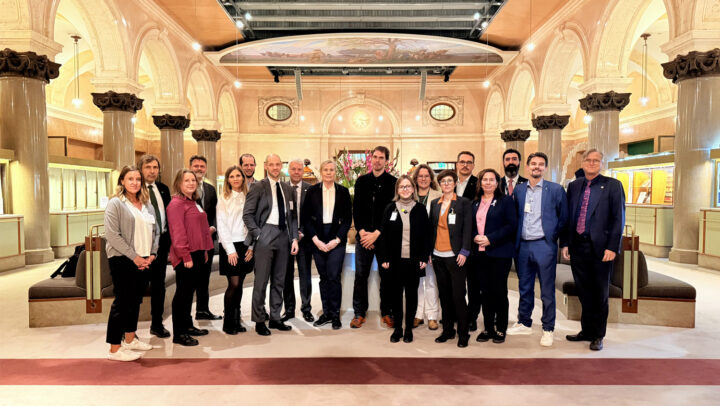
Participants in the symposium outside the Royal Swedish Academy of Sciences. Photo: Erik Thor/Young Academy of Sweden
When democracies are tested, the conditions of knowledge are also put to the test. The symposium showcased both the breadth of the challenges faced by academia and the strength found in international collaboration among young academies.
After a first day at the Royal Swedish Academy of Sciences with sharp analyses and comparisons between countries and systems, day two took the next step in the premises of the Royal Swedish Academy of Letters, History and Antiquities. The participants then formulated practical ways forward that are now propelling the work beyond the meeting in Stockholm. Central to the discussions was the Stockholm Charter for Academic Freedom, which we initiated in 2023 and which, at the time of writing, has been signed by 27 young academies globally.
The keynote of the symposium was given by Helen Eenmaa, former chair of Young Academies Science Advice Structure. With energy, she set the framework for the days in Stockholm: Academic freedom is part of the fundamental structure of democracy. It is not just an internal university matter, but a prerequisite for knowledge to contribute what democracy needs most.
Helen highlighted the open truth-seeking of research and argued that intellectual openness, disagreement, and critical examination must take place for society to differentiate well-founded knowledge from authority-driven claims. This also makes academia a democratic control function. By producing knowledge that decision-makers can rely on – but cannot own or control – academia contributes to the separation of powers in democracy.
At the same time, she emphasised that freedom is something that must be earned and defended in practice through transparency, independence, and a culture where internal criticism is seen as a strength.
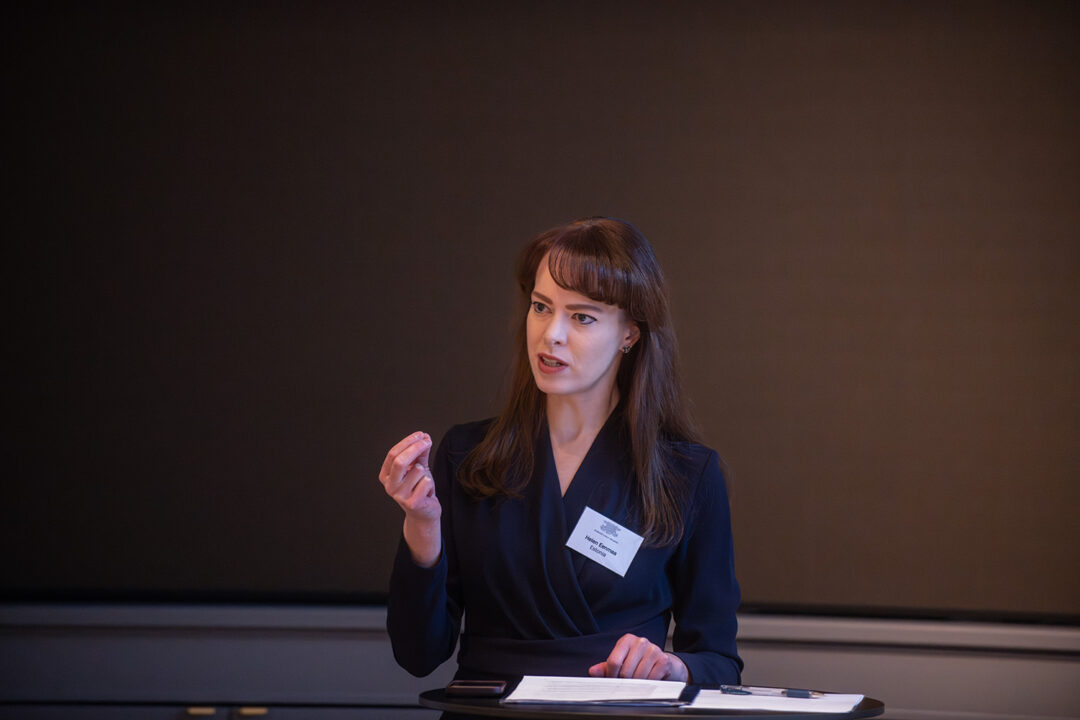
Helen Eenmaa during her keynote lecture. Photo: Erik Thor/Young Academy of Sweden
With Helen’s keynote as the foundation, the symposium’s first panel discussion took place. The moderator was our member David Marlevi, who invited the panel to concretise what the democratic perspective means in practice.
Participating in the panel were Shirin Ahlbäck Öberg, professor of political science at Uppsala University, Tora Holmberg, rector of Umeå University and chair of the Committee for the Voice of Democracy, as well as Hanna Nordell, executive director at PEN Sweden.
Shirin emphasised that academic freedom is threatened not only by acute crises but also by a slow institutional erosion where the ways universities are governed, communicated, and self-assessed gradually change. She also described the relationship between academia and politics in Sweden as an informal “social contract” that has now effectively been broken.
Tora linked to this by pointing out how higher education institutions are increasingly used as “vehicles for political agendas”, while also highlighting quality in research and teaching as one of the strongest safeguards: Trust in academia is a democratic capital that must be earned and defended.
Hanna broadened the perspective to freedom of speech and reminded us of what remains unseen: Books that are never written and speeches that are never given. She described how authors and intellectuals are increasingly targeted because of their identity, and how book bans and self-censorship have direct consequences for public discourse.
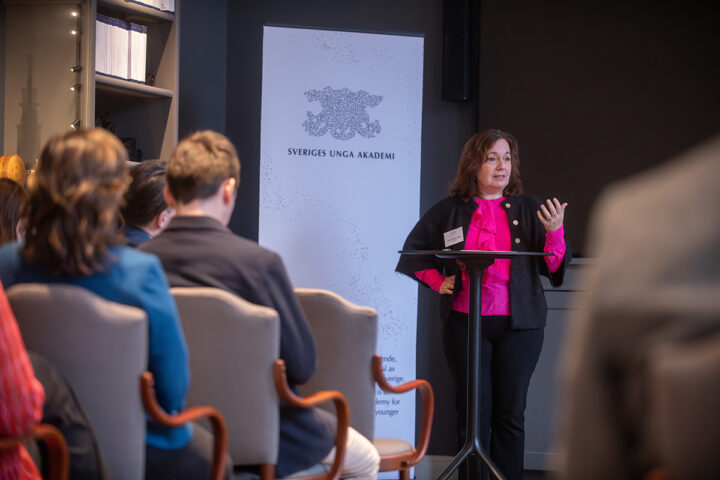


Two international panel discussions, both moderated by our member Laura Bacete Cano, provided the day with both breadth and sharpness.
In the first panel, Andrea Monroy-Licht from the Young Academy in Colombia, Oscar Xavier Guerrero from the Young Academy in Mexico, Maurine R. Musie from the Young Academy in South Africa, and our member David Marlevi participated. Together, they illustrated how threats, political pressure, and economic governance can look different yet lead to the same outcome. The space for free research is shrinking, often gradually and under the radar. David also highlighted how research policy in Europe is increasingly linked to security and strategic autonomy, while universities in many places find themselves in the role of a counterforce as authoritarian tendencies grow.
The second panel discussion continued in the same vein with Guro Nore Fløgstad from the Young Academy of Norway, Mariel Lavieri from New Voices in the USA, Iván Gabriel Dalmau from the Young Academy in Argentina, and Dávid Havasi from the Young Academy in Hungary. Here, several common patterns re-emerged. Individual researchers can be directly targeted but also influenced indirectly through funding systems, priorities, and narratives about what is considered legitimate research.
Overall, the message was hopeful. Academic freedom can be defended when academic leaders take responsibility, when gradual restrictions are made visible in time, and when the research community communicates with more than just the already convinced.


After a first day that clarified how academic freedom functions as a democratic cornerstone, the second day of the symposium was dedicated to translating discussions into concrete joint work.
A central agreement was to develop Global Core Commitments for Academic Freedom: a shared, operational minimum standard for the conditions that must be in place for academic freedom to be realised in various national contexts. In connection to this, the participants decided to establish an international working group that will start working on a first draft in 2026 and anchor it in relevant research and existing support structures.
To ensure that the commitments do not remain just a document, the participants also agreed on a series of joint global webinars once a first version is in place. The idea is to create an open arena for feedback, experience exchange, and discussion on how the commitments can be used in various contexts, with a first meeting planned for the second quarter of 2026.
Finally, the importance of communicating with the public was highlighted. The participants decided to develop open materials explaining why academic freedom is essential for democracy, as a foundation for solidarity and collective learning.


The initiator and person responsible for the symposium was our member Juan C. Rocha. The working group also included Laura Bacete Cano, Cecilia Engdahl, Alison Gerber, Maria Mancilla Garcia, David Marlevi, and Janina Seubert. The symposium was organised with financial support from the Wenner-Gren Foundations and Riksbankens Jubileumsfond.
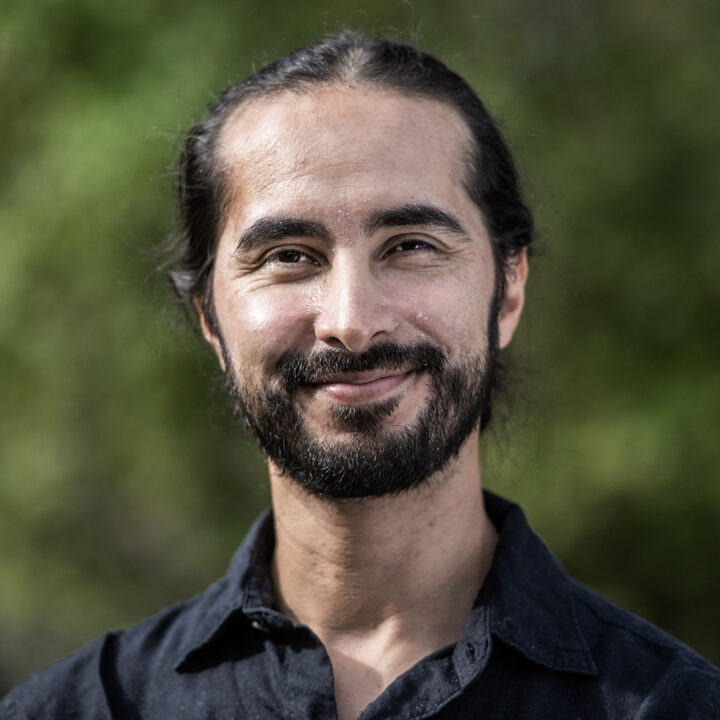
I am glad that we could gather young researchers from so many countries here in Stockholm. It was two very educational days, which also instil hope for the future of academic freedom.
Juan C. Rocha, initiator and responsible for the symposium
Photo: Erik Thor/Young Academy of Sweden


Latest news from the Young Academy of Sweden, published approximately six times a year. You can unsubscribe at any time.


