21 October 2026
In October, leaders from around the world gathered in Kyoto, Japan, for this year’s edition of the Science and Technology in Society Forum (STS Forum). Since it was established in 2004, the forum has been an international meeting place for leaders from politics, academia and business to discuss how research and technology can contribute to humanity’s future. This year, The Young Academy of Sweden was represented by two members: Laura Bacete Cano and Carolin Schütze together with CEO Sverker Lundin.
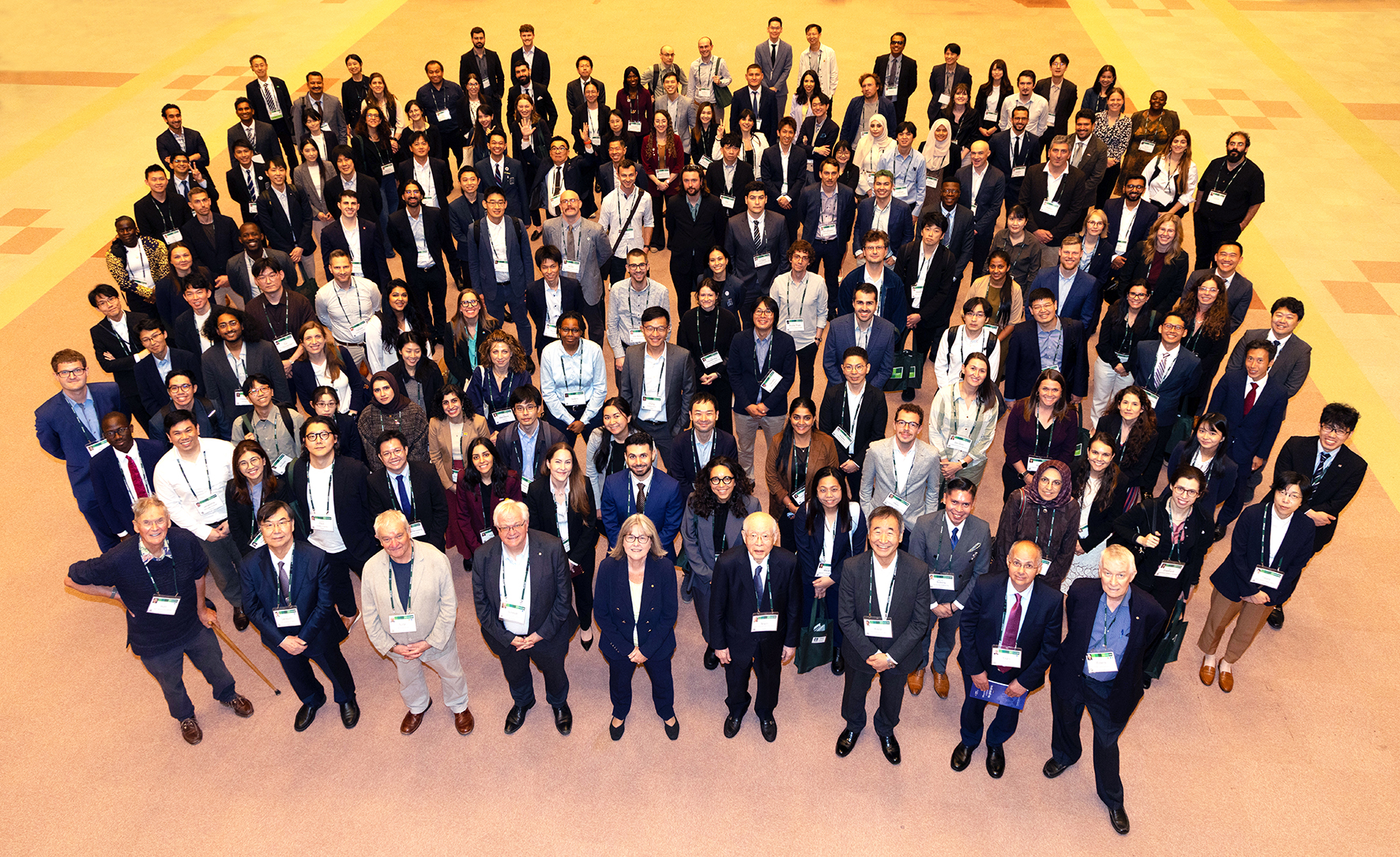
Group photo from STS Forum. Photo: Stata Perpetual.
Artificial intelligence (AI) was a recurring theme at this year’s forum. Discussions raised questions about how AI can contribute to scientific breakthroughs, but also about the risks of research becoming dependent on tools and models that researchers themselves cannot set requirements for or scrutinise.
– The question of how AI is transforming both the scientific process and the future of society ran throughout the meeting, even in discussions where AI was not part of the original topic. It is clear that many people are trying to understand these developments and their consequences, and that there are still many different questions and answers, says Sverker Lundin.
Other topics raised included research funding and academic freedom. Participants discussed, among other things, how politically prioritised research areas affect the scope for basic research, and how secure career paths can contribute to a more sustainable academic sector.
– In many countries, public investment in research is stagnating or declining. At the same time, an ever-larger share of research funding is being directed towards politically prioritised areas, and research is becoming increasingly dependent on infrastructure owned by private companies. The shared feeling was that the research community has gradually lost control over what is funded and why. At the same time, the system is becoming increasingly competitive, with more people competing for ever-scarcer resources, says Laura Bacete Cano.


An important part of taking part was exchanging experiences with research leaders from different countries and developing the Young Academy of Sweden’s international network. The conversations laid the foundations for ongoing dialogue and future collaborations.
– The roundtable discussion with Professor Isolde Karle, Vice-Rector for Diversity, Inclusion and Professional Development at Ruhr University, was my most inspiring meeting. We had fruitful discussions about how diversity and inclusion can be strengthened in higher education. Another, slightly more unexpected meeting was with Professor Karlheinz Brandenburg at the Technical University of Ilmenau. I sat next to him during dinner and found out that he was the one who invented the MP3 format, says Carolin Schütze.
The experiences from the STS Forum are valuable to the Young Academy of Sweden’s work on the issues Sweden faces and needs to address.
– Something I’ll take away is that we need bottom-up funding for curiosity-driven research, as well as career structures that offer both stability and the opportunity for a life outside the laboratory. We also need a clear position on AI in research, where public, open and shared infrastructure is prioritised, says Laura Bacete Cano.
The Young Academy of Sweden was part of a Swedish delegation brought together by the Swedish Embassy the day before the meeting. For the Young Academy of Sweden, this year’s STS Forum strengthened the Academy’s international contacts and impact, and ensured that younger researchers’ perspectives were also included in discussions about the future of research and society.
– I left the forum convinced that we need more meeting places like this, where the aim is to think together rather than present results, says Laura Bacete Cano.

Latest news from the Young Academy of Sweden, published approximately six times a year. You can unsubscribe at any time.


